
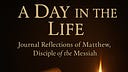
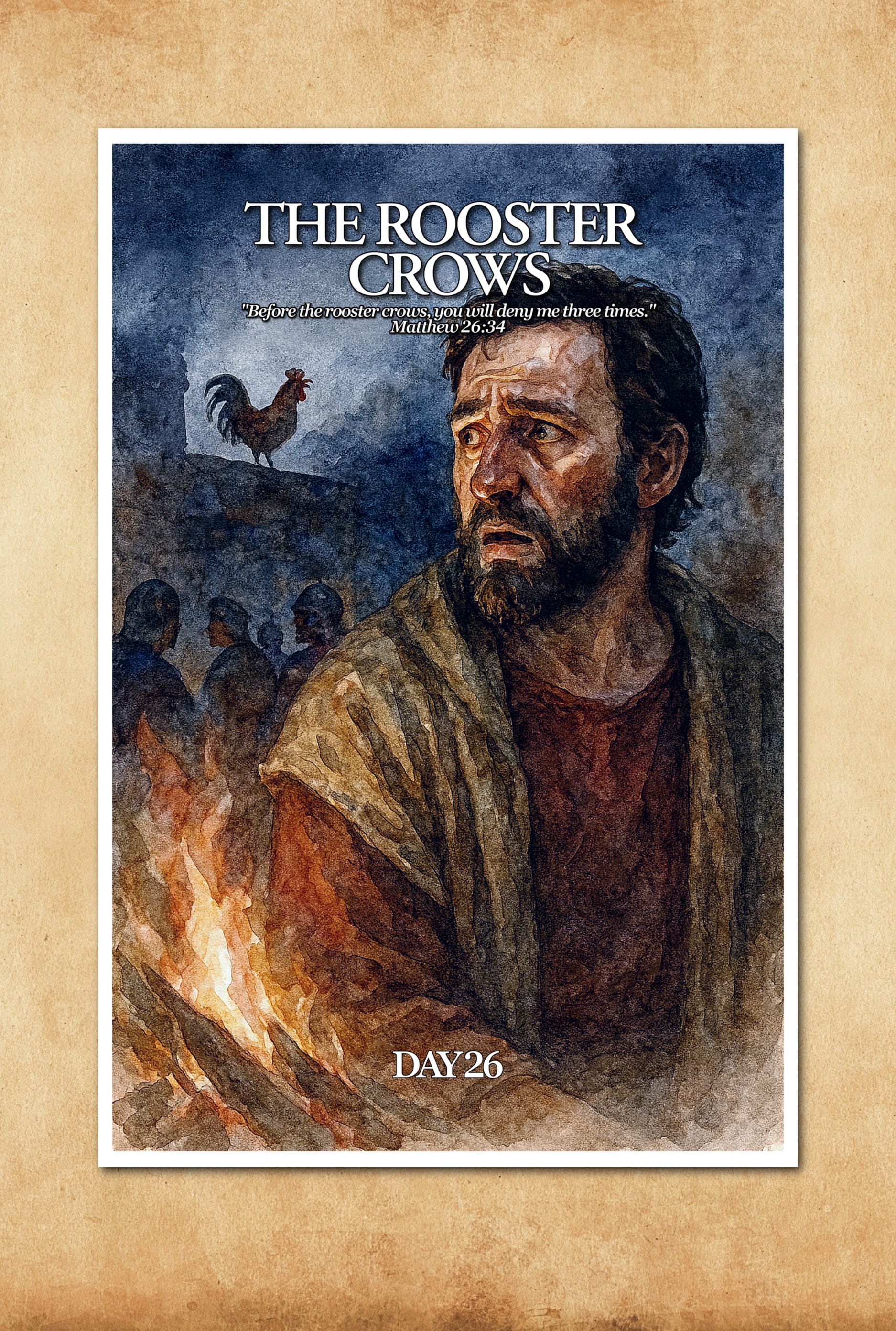
DAY 26 – The Rooster Crows
The Night of Two Hearts

The night did not end—
it unraveled.
Torches guttered low,
shadows trembled on stone.
Inside, before the council,
He stood—silent, bruised—
blood at the mouth,
eyes steady as dawn withheld.
Questions flew like arrows,
accusations piled like stones.
They pressed Him for a defense,
and He gave them none.
Outside, by the brazier,
Peter warmed his hands—
close enough to see,
far enough to pretend.
“You were with Him,” a servant girl said.
Peter flinched.
“I don’t know what you mean.”
Farther in the city, Judas walked alone—
silver heavy at his side,
heavier in his chest.
He had pictured a spark,
a revolt, a rising;
force the Messiah’s hand,
force the kingdom to come.
But Jesus did not fight—
He yielded.
The plan in Judas’ purse fell quiet.
“You were one of His,”
another voice insisted.
Peter shook his head.
“No—I was not.”
Inside, robes tore open.
The room surged forward.
“He has blasphemed!” they cried,
and struck the One
who could summon angels.
At the Temple gate,
the doors were shut.
Judas beat the wood—
no answer but echo.
By the fire again,
a third voice rose:
“Your accent betrays you;
I saw you with Him!”
Peter stood, shaking,
words splitting into oath:
“I swear—
I do not know the man!”
Silence pressed close.
And then—a sound,
clear and ancient,
cutting through the dark:
The rooster crowed.
Bound and bloodied,
He turned toward the window.
His eyes found Peter—
no accusation,
only sorrow.
Heat became shame.
Peter stumbled backward,
fled the courtyard,
weeping in the alley’s cold.
At last the gate opened.
Judas entered the courts,
flung the silver at their feet:
“I have sinned against innocent blood.”
The coins clattered unanswered,
bright against hard stone.
The priests looked past him,
and the night went on.
The night did not end—
but something unraveled in both of them:
One undone by fear,
the other by betrayal.
He Followed At A Distance
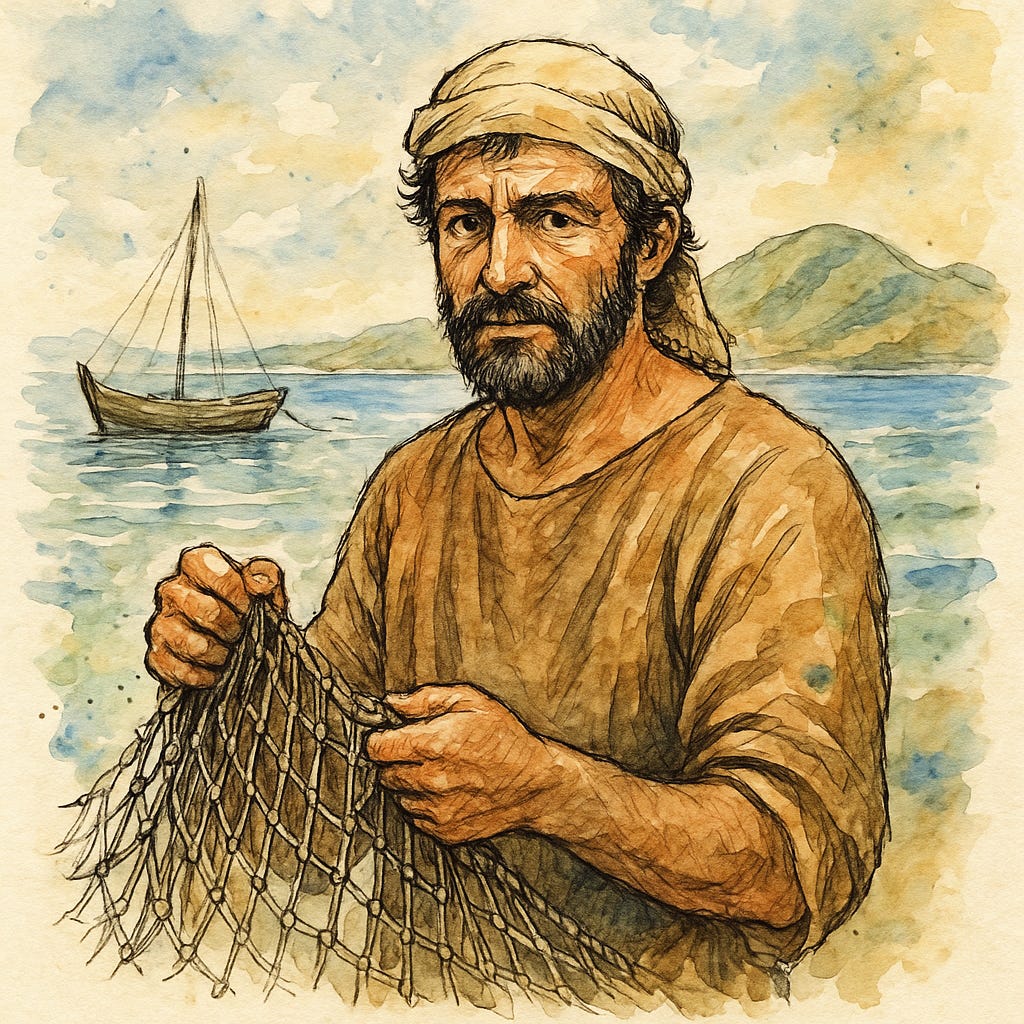
I think of Peter often that night.
Bold Peter, who once stepped onto the waves
while the rest of us clung to the boat.
He had sworn, even if all the others fell away,
he would not.
And yet, when the soldiers led Jesus away,
Peter did not run home.
He followed.
Not near enough to be seen as a disciple,
not far enough to be safe.
He walked that thin line of loyalty and fear,
pulled forward by love,
held back by dread.
The courtyard was filled with enemies—
the very hands that had seized the Lord,
the very mouths that mocked Him.
And there, Peter sat down among them.
The fire crackled,
sparks rising into the night air.
Perhaps he thought he could blend in,
listening, waiting,
watching the outcome from the shadows.
I did not see him with my own eyes then,
but later I heard his story.
How strange that the one who swore
he would die at Jesus’ side
now warmed his hands beside those
who condemned Him.
And I think—
How many times have I followed at a distance?
Close enough to hear His voice,
but not close enough
to be counted as His.
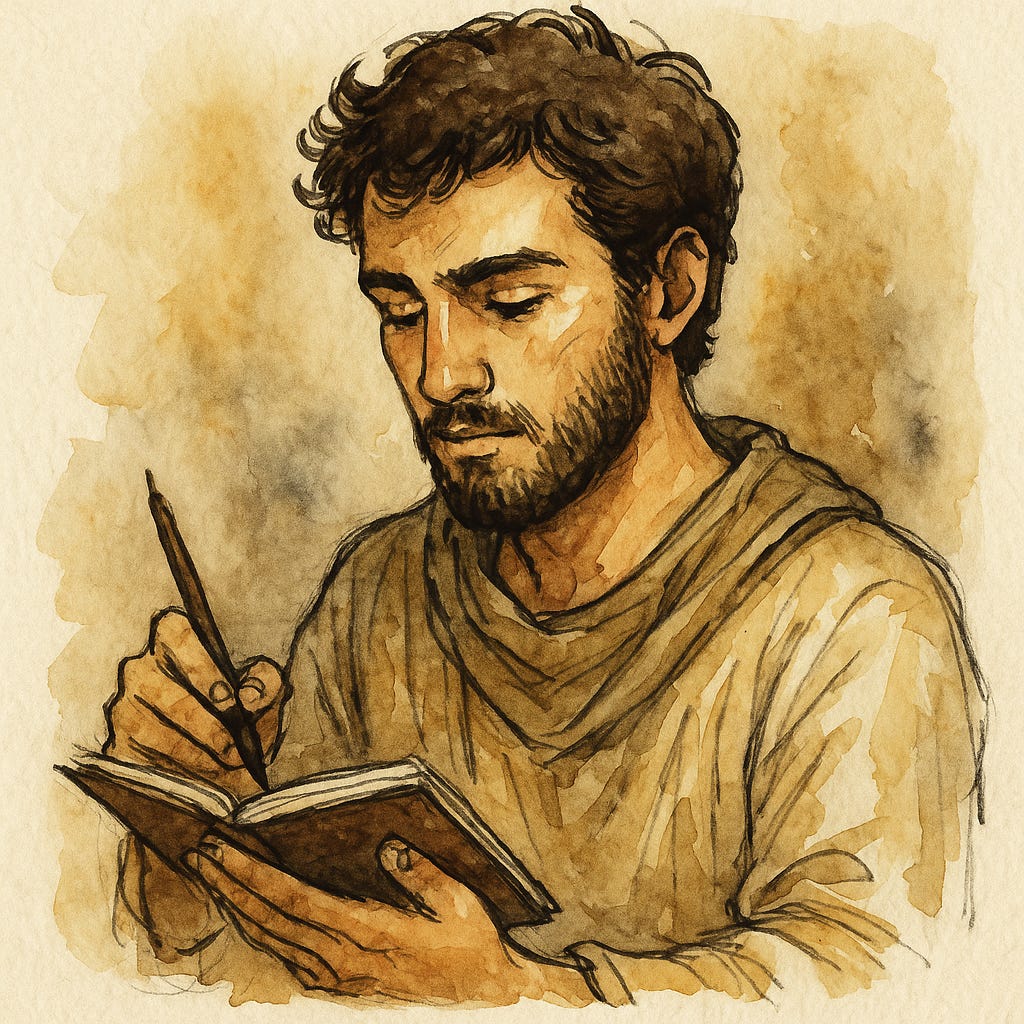
—Matthew
Fear Whispers Louder
I told Him I would die for Him.
Fists clenched,
fire in my chest.
I believed it—
or wanted to believe it.
Belief is loud
until fear whispers louder.
I followed at a distance—
not close enough to be seen,
not far enough to walk away.
They lit a fire in the courtyard.
I sat with them—the ones who seized Him,
the ones who bound Him.
She looked at me—a servant girl,
not a soldier.
Not a threat, just a voice:
“You were with Him!”
Something in me snapped.
Not a shout—just a lie.
A small denial
to keep the questions away.
But the questions came.
I denied Him again and again—
each word colder
than the last.
Then the sound of the rooster,
cutting the dark.
And through the window,
His eyes on mine—no accusation,
only sorrow.
He knew. He always knew.
And still—He had chosen me.
Swamped by sorrow and fear,
I backed away from the fire—not to hide,
but because I no longer knew who I was.
If I could deny Him, who was I?
I thought I was a rock.
But tonight, before the rooster’s cry,
I broke—like sand.
—Peter
The Silence Was The Loudest Part
The courtyard was crowded—
priests, guards, strangers at the brazier—
but it felt like a room full of locked doors.
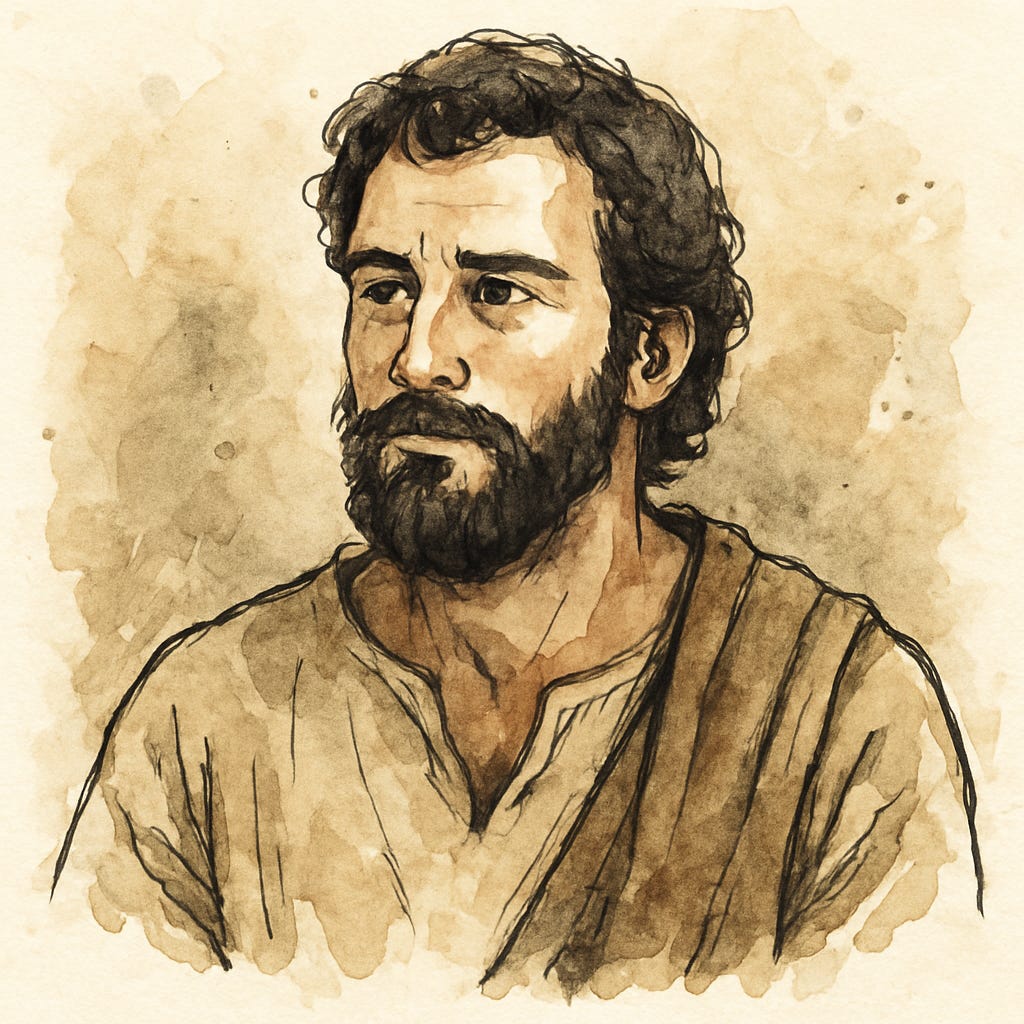
I saw Peter by the fire—
eyes darting, shoulders drawn in,
shrinking from something only he could see.
Inside, through the gaps—
torches, ripped robes, raised voices.
They weren’t hunting truth;
they were building a verdict—
stone by stone, lie by lie.
And He stood there,
not answering—
not for lack of words,
but because no one was meant to hear.
I wanted someone to speak,
to say this was wrong,
to name the sick He healed,
the leper He touched,
the dead He raised.
But the silence
was the loudest thing in the room.
Peter denied Him—
once, then again, and again.
Each time he spoke,
I felt my own courage
thin a little more
and slip away.
Then the rooster—
sharp as morning.
He looked through the window.
Peter broke.
And I just stood there—still.
Cowardice doesn’t always run;
sometimes it simply watches
and does nothing.
—Stephen
The Strongest Man In The Room
I’ve seen plenty of prisoners.
Thieves.
Murderers.
Fanatics.
Most of them shout. Some cry.
The proud ones curse.
The broken ones beg.
But Him?
He didn’t do any of that.
He looked around the room
as if He knew each man—
and still didn’t hate them.
That made me uncomfortable.
I was posted near the courtyard—
close enough to hear the lies.
Close enough to see Him flinch
when they struck His face
and mocked Him,
“Prophesy!”
He didn’t flinch at the pain.
Only at the cruelty.
He should have been angry.
Should have defended Himself.
Should have stared us down
like a man wrongfully accused.
But He didn’t.
He stood like a man
who had already made peace
with the outcome.
One of His followers was outside—the Galilean.
He said he didn’t know the prisoner.
Said it again. And again.
Then the rooster crowed.
And everything stopped.
Jesus turned.
Looked through the window.
Straight at him.
And I’ll never forget
what I saw in that look—
not rage, not blame.
Only heartbreak.
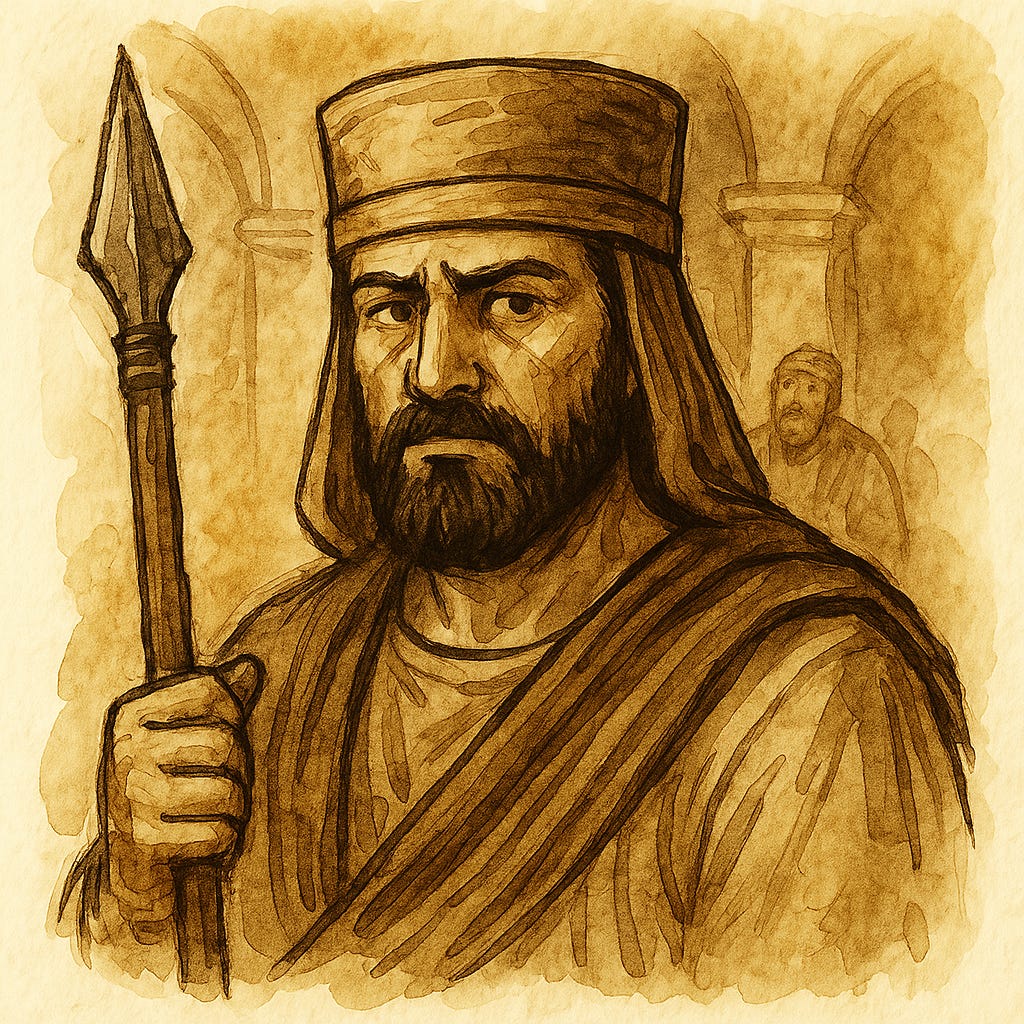
I tightened my grip on my spear.
Next to His calm,
my steel felt like a reed
in a thunderstorm.
All our strength was nothing
before His authority.
—Darius, Temple Guard
Judas – I Thought He Would Fight
I didn’t plan for this.
I thought He would resist—
call down fire,
prove once and for all
who He was.
He walked on water,
raised the dead,
stilled storms with a word.
I thought if I lit the fuse,
He would ignite the kingdom.
But He didn’t.
He let them bind Him.
Didn’t lift a hand.
Didn’t lift His voice.
When they seized Him in the garden,
He didn’t even look at me.
I kissed Him—
and He called me friend.
How could He?
He knew what I carried,
and still He did not pull away.
Mercy, not scorn—
my rehearsed courage
crumbled in my mouth.
Thirty coins in my hand—
I thought they would sound like certainty.
They rattled like bones.
They bit my palm,
and the weight felt wrong.
The lanterns shook.
The swords did what swords do.
I stepped back into the dark,
and that word, “friend,”
followed me—
it would not let me breathe.
I told myself
I was forcing the kingdom’s hour,
pushing Him to power.
But watching Him yield,
I knew who held the kingdom.
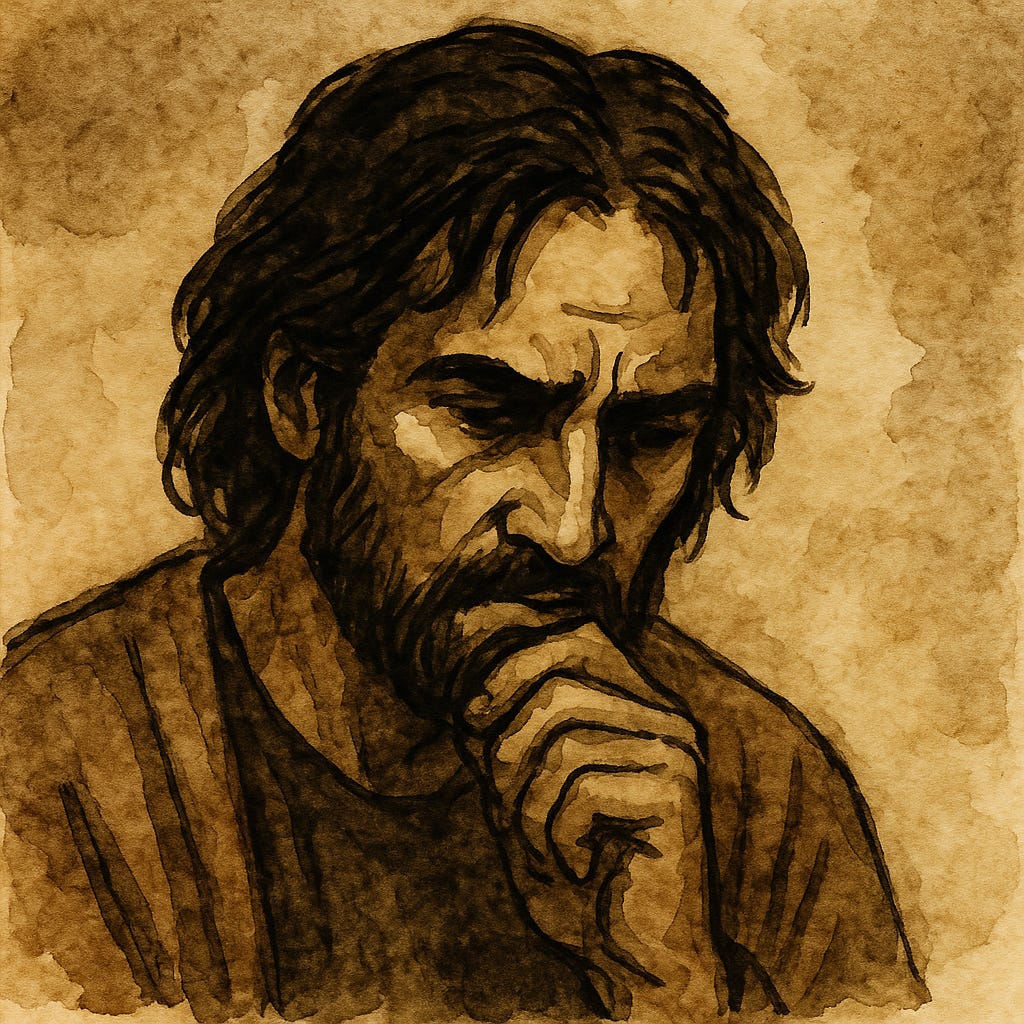
I lifted a coin.
Caesar’s seal marked the metal;
His seal marks me.
I am not Caesar’s—
I carry His likeness.
And I betrayed
the One whose image I carry,
trading Him away
for silver—
and a lie.
—Judas
Looking Back – The Rooster’s Cry
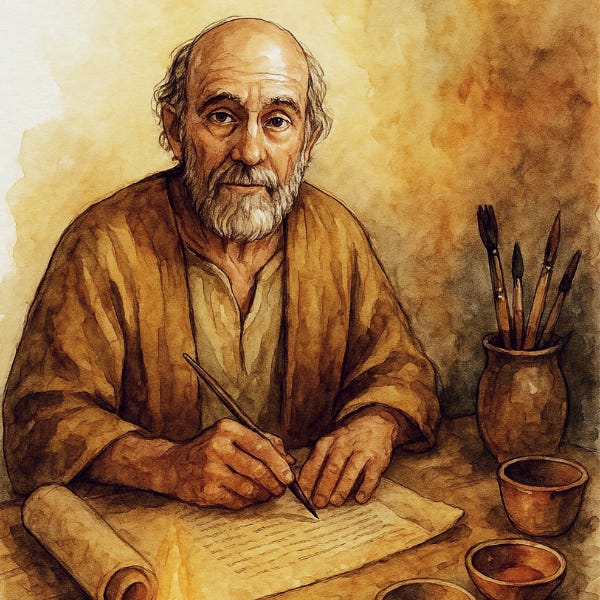
I remember the sound—
not only the rooster,
but Peter’s sobs in the dark.
We had all fled,
yet his courage carried him farther.
Closer to the fire,
closer to the test.
A servant girl’s question,
then another,
then the crowd.
“I don’t know the man!”
Once, then twice—
then oaths and curses.
The night went still,
and the rooster answered.
His vows from the upper room
came back hollow
in the courtyard.
Bravery without endurance breaks.
Fear found his fault line,
and it split.
Yet He had said it would be so—
not to shame,
but to prepare.
Failure foreseen,
mercy already planned,
return already promised.
Later by the lake,
the Voice he denied
restored him.
“Feed My sheep.”
Grace rebuilt
what fear had broken,
and Peter stood again.
I see my night in his.
Different words,
same tremor.
The rooster’s cry
is not the end;
it is the start of repentance,
the doorway to grace.
—Matthew